Acute Mountain Sickness (AMS) is a real, physiological hazard triggered when ascending rapidly to heights above 8,000 feet. Because the barometric pressure drops, fewer oxygen molecules enter your lungs per breath. Follow these clinical pacing rules to protect your health.
1. Recognize the Clinical Symptoms of AMS
Symptoms typically manifest within 6 to 12 hours of rapid elevation transition. It is crucial to monitor yourself and your fellow travelers for early signs:
- Mild Symptoms: Persistent throbbing headache, dizziness, mild nausea, fatigue, insomnia, or loss of appetite.
- Severe Symptoms (Emergency): Tightness in the chest, dynamic breathlessness even while lying down, confusion, loss of physical balance (Ataxia), or blue-tinged lips/fingernails.
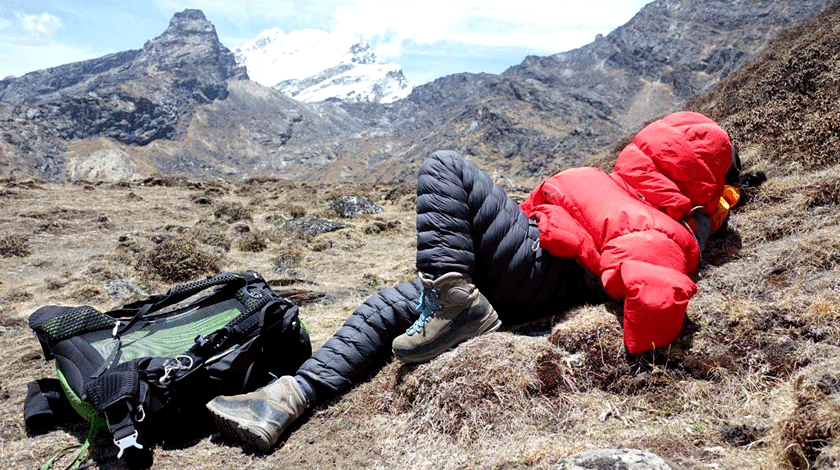
2. The Golden Rules of Acclimatization
The most effective preventive measure is gradual ascent. This is why our routing dispatch desk strongly advocates the **Srinagar-Leh Highway (NH1)** over direct flights or the Manali route. Resting at the intermediate elevation of Kargil (8,780 ft) allows your body to build up red blood cell counts safely.
| Prevention Metric | Recommended Safety Protocol Standard |
|---|---|
| Daily Elevation Limit | Do not increase your sleeping altitude by more than 1,000–1,500 feet per 24 hours. |
| Fluid Hydration Intake | Drink 4 to 5 liters of clean water daily. Clear fluids carry supplemental oxygen to body tissue blocks. |
| Prohibited Substances | Strictly avoid alcohol, tobacco, and sedatives. These act as respiratory depressants and mask early AMS warning signs. |
| Medical Prophylaxis | Consult your doctor regarding **Acetazolamide (Diamox)**. It helps speed up breathing adaptation rates. |
3. Immediate Emergency Protocol
The supreme law of high-altitude medicine is straightforward: **Climb high, sleep low, and descend immediately if symptoms worsen.** If a traveler shows signs of severe breathing distress or confusion, administer supplemental oxygen from the onboard cylinder and descend immediately to a lower base station, such as Kargil town clinical triage or Sonamarg base hospitals.